Showing posts with label ITALIAN AMERICAN. Show all posts

DiMaggio and Bellino


JOE DiMAGGIO


DiMAGGIO & BELLINO


 features Joe DiMaggio and his family's culinary traditions in his Italian-American cookbook, SUNDAY SAUCE.  The book highlights recipes like "Mamma DiMaggio’s Sunday Gravy," honoring the mother of the legendary Yankee Clipper, Joe DiMaggio.

  • Connection: Daniel Bellino-Zwicke, a cookbook author and former restaurant professional, highlights Joe DiMaggio as a key figure in Italian-American culture in his books.
  • "Sunday Sauce": In his book Sunday Sauce, Bellino-Zwicke includes recipes for classic Italian-American dishes, featuring stories and recipes from famous figures, including Joe DiMaggio.
  • "Mamma DiMaggio's Gravy": The book specifically includes a recipe for "Mamma DiMaggio's Sunday Gravy," which is a nod to Joe DiMaggio's mother, Rosalia, and the traditional Sunday meals of Italian-American families.
  • Other References: Bellino-Zwicke often highlights famous Italian-Americans like DiMaggio, Frank Sinatra, and Tony Bennett in his work, celebrating the culture and food of Italian New York.


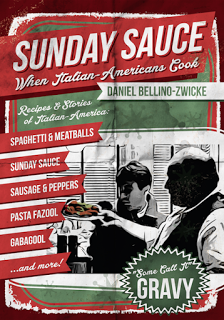
SUNDAY SAUCE

With MAMMA DiMAGGIO'S SUNDAY GRAVY

RECIPE


Daniel Bellino Zwikce


DANIEL BELLINO ZWICKE

Daniel Bellino Zwicke (also known as Danny Bolognese) is a prominent New York City - based author, wine professional, and former chef specialising in Italian-American Cuisine and clutlrue. With over 30 years of experience in the restaurant industry, he is recognized as a leading authority on Italian wine and the creator of America's first Venetian wine bar, Bar Cichetti.

Professional Background
Zwicke has held various roles in renowned New York City establishments, including:
Chef & Wine Director: Worked at acclaimed restaurants such as Da SilvanoDel PostoBarbetta, and John's of 12th Street.
  • Restaurateur: Founded Bar Cichetti in 1997, credited as the first Venetian-style bacaro (wine bar) in the United States.
  • Influencer: Runs the successful Instagram page @newyork.italian, which has over 500,000 followers and celebrates Italian-American culture.
Published Works
He has authored numerous bestselling cookbooks and travel guides, often blending recipes with personal essays and cultural history. Notable titles include:
  • Sunday Sauce: A bestseller focusing on Italian-American home cooking and "secret" family recipes.
  • Grandma Bellino’s Italian Cookbook: A collection of traditional recipes from his Sicilian grandmother.
  • Positano: The Amalfi Coast Cookbook & Travel Guide: His 2021 release that combines regional recipes with travel insights.
  • The Sinatra Cookbook: Also known as Sinatra Sauce, featuring recipes and stories tied to Frank Sinatra's favorite meals.
  • The Big Lebowski Cookbook: Titled Got Any Kahlua?, this book features recipes inspired by "The Dude".
  • The Feast of the 7 Fish: A guide to the traditional Italian Christmas Eve seafood dinner.

CURENT & UPCOMING PROJECTS

New Books: He is currently working on a book about Venice (tentatively titled My Venice) and another focusing on the Chianti region and its wines.
  • Travel: He continues to travel extensively through Italy, recently visiting Verona, Florence, and Lucca to gather material for his upcoming works.
  • His books are widely available through major retailers like Amazon and 
  • ThriftBooks


BOOKS by Daniel Bellino - Amazon.com


JOE DiMAGGIO

"The SWING"


JOE DiMAGGIO

Giuseppe Paolo DiMaggio was born on November 25, 1914, in Martinez, California, the eighth of nine children born to Italian immigrants Giuseppe and Rosalia DiMaggio, from Isola delle Femmine  (Sicily). His Italian birth name was Giuseppe Paolo DiMaggio. Rosalia named her son "Giuseppe" after his father in the hopes he would be her last child; "Paolo" was in honor of Giuseppe's favorite saint, Paul of Tarsus.

Joe DiMaggio was one of the most recognizable and popular men in mid-twentieth century America. He was celebrated in song and literature as an iconic hero, and he was married, briefly, to the nation’s number one glamour girl. On March 16, 1999, the House of Representatives passed a resolution honoring him “for his storied baseball career; for his many contributions to the nation throughout his lifetime; and for transcending baseball and becoming a symbol for the ages of talent, commitment and achievement.”1

But first and foremost Joe DiMaggio was a ballplayer. Known as the Yankee Clipper, he was the undisputed leader of New York Yankees teams that won nine World Series titles in his 13-year career that ran from 1936 to 1951, with three years lost to duty in World War II. He was three times the American League’s Most Valuable Player and he holds what many consider to be the most remarkable baseball record of all, a 56-game hitting streak in 1941. As the son of immigrants, he was the embodiment of the American Dream, a rags-to-riches story played out in pinstripes.

Joseph Paul DiMaggio was born Giuseppe Paolo DiMaggio on November 25, 1914, in Martinez, California, 25 miles northeast of San Francisco. His parents, Giuseppe and Rosalia (Mercurio) DiMaggio, had settled there after emigrating from Sicily. After Joe was born they moved the family to San Francisco, where Giuseppe continued to work as a fisherman. Joe was the eighth of their nine children, one of five sons. Two of his brothers, Vince and Dominic, would also play in the major leagues.

Unlike two of his older brothers, Joe had no interest in joining his father on the fishing boat. Instead, he played for several amateur and semi-pro teams in baseball-rich San Francisco. It was 19-year-old Vince, who was then playing for the San Francisco Seals of the Pacific Coast League, who got Joe into professional ball. When the Seals found themselves in need of a shortstop near the end of the 1932 season, Vince convinced Seals manager Ike Caveney to give his 17-year-old brother a chance. Joe played in the final three games of the season, and then was signed to a contract in 1933 for $225 a month.

Moved to the outfield because of his erratic arm, DiMaggio hit .340 and set a PCL record by hitting in 61 straight games. In 1934, he hit .341, but a knee injury that sidelined him in August made major-league teams leery of signing him. The Yankees offered to buy his contract for $25,000 and five players, but with the contingency that he remain with the Seals in 1935 to prove he was healthy. DiMaggio made a convincing case by hitting .398, with 34 homers and 154 runs batted in.

In 1936, only two years after the departure of Babe Ruth, the heralded rookie came to spring training facing big expectations. Writing in The Sporting News on March 26, Dan Daniel noted, “Yankee fans regard him as the Moses who is to lead their club out of the second-place wilderness. . ..” It didn’t take long for the rookie to make his mark. Halfway through the season, when he was hitting around .350 and had started in right field in the All-Star Game, his photo was on the cover of Time magazine. For the year he hit .323 with 29 homers and drove in 125 runs. 

DiMaggio was the classic five-tool player; in addition to hitting for average and power, he could run, throw, and field. Joe McCarthy, the Yankees manager from 1931 to 1946, called him the best base runner he ever saw. His all-around play led the 1936 Yankees to the first of four straight World Series titles. The 21-year-old sensation had established himself as the successor to Babe Ruth. After the Series, he received a hero’s welcome in his home town of San Francisco, where Mayor Angelo Rossi gave him the key to the city.

DiMaggio finished second in the MVP vote in 1937, despite leading the American League in home runs, slugging percentage, runs, and total bases. He won the first of his three MVP Awards in 1939, when he led the league with a career-best .381 average. Following that season, he married 21-year-old Dorothy Arnold, a singer, dancer, and actress he met while filming a bit part in the movie Manhattan Merry-Go-Round.

By then the 6-foot-2, 190-pound outfielder was acknowledged as the best player in baseball, but to some his ethnic background was still ripe for stereotypical portrayal. In a cover story in the May 1, 1939 issue of Life magazine, Noel Busch identified DiMaggio as a “tall, thin Italian youth equipped with slick black hair” and “squirrel teeth.” But the young ballplayer apparently confounded Busch’s general perception of Italian Americans. “Although he learned Italian first, Joe, now twenty-four, speaks English without an accent and is otherwise well adapted to most U.S. mores. Instead of olive oil or smelly bear grease he keeps his hair slick with water. He never reeks of garlic and prefers chicken chow mein to spaghetti.”3

After winning a second consecutive batting title in 1940, DiMaggio reached a new level of fame in 1941. He set one of the most enduring records in sports by hitting in 56 consecutive games. On May 15, the day the streak began, the Yankees were in fourth place, and DiMaggio had batted a lowly .194 over the previous 20 games. On June 17, DiMaggio broke the Yankee hitting-streak record of 29 games, set by Roger Peckinpaugh in 1919 and equaled by Earle Combs in 1931.

One of those rare athletes — like Babe Ruth and Muhammad Ali — who transcended the world of sport, DiMaggio has been called by more than one writer the last American hero. Revisionist historians later offered a more nuanced view, portraying him as a flawed hero who became increasingly reclusive and suspicious of others. Nevertheless, when he died his enduring status as a cultural icon was confirmed by an outpouring of adulation which few public figures, in any walk of life, could evoke. His death was front-page news in every major newspaper, was covered extensively on television newscasts and specials, and was the cover story in Newsweek magazine. Referring to the frequent bulletins on DiMaggio’s health that had been issued in the months prior to his death, Frank Deford wrote that it was “as if he were some great head of state.”25 As one Brooklyn native put it, DiMaggio “epitomized an era when, for a lot of us, baseball was the most important thing in life.”

The answer to Paul Simon’s question — Where has Joe DiMaggio gone? — remains the same: Nowhere. He remains firmly lodged in the American consciousness as a stylish symbol of a time when baseball was the undisputed national pastime and America was enjoying unprecedented prosperity. On April 25, 1999, two months after his death, DiMaggio’s monument was unveiled in Yankee Stadium’s Monument Park, joining those honoring Miller Huggins, Lou Gehrig, Babe Ruth, and Mickey Mantle. The inscription reads, in part, “A Baseball Legend and An American Icon.”


JOE DiMAGGIO - CAREER MAJOR LEAGUE BASEBALL STATS

GAMES PLAYED     1,736

LIFETIME BATTING AVERAGE.    .325

HITS.   2,214

HOME RUNS.  361

RUNS BATTED IN (RBI)    1,537

On-BASE PERCENTAGE (OBP).   .398

SLUGGING PERCENTAGE.  .579

On-BASE PLUS SLUGGING .977


MAJOR AWARDS & ACHIEVEMENTS
  • 3× American League MVP: 1939, 1941, and 1947.
  • 13× All-Star: Selected in every season he played.
  • 9× World Series Champion: 1936–1939, 1941, 1947, and 1949–1951.
  • 2× AL Batting Champion: 1939 (.381) and 1940 (.352).
  • 2× AL Home Run Leader: 1937 and 1948.
  • 2× AL RBI Leader: 1941 and 1948.
  • MLB Record Hitting Streak: Hit safely in 56 consecutive games from May 15 to July 16, 1941.
  • Hall of Fame Induction: Inducted in 1955.
  • 1937: Led the league in home runs (46) and runs scored (151), batting .346 with a career-high 167 RBI.
  • 1939 (First MVP): Career-high .381 batting average with 30 HR and 126 RBI.
  • 1941 (Record Streak): Batted .357 with 30 HR and 125 RBI; set the 56-game hitting streak record.
  • 1943–1945: Missed three seasons of his prime while serving in the U.S. Army Air Forces during World War II.


Sauce or Gravy ?

.

The Great Debate, is it GRAVY Or SAUCE ???

What do you Call it?


CHARLIE SCORSESE Makes SAUCE

GOODFELLAS


  GIA Says : It’s interesting to me that people who call it “gravy” believe that the people calling it “sauce” must only be those who came as immigrants later and that “sauce” is a newer term. Not in my estimation. My grandparents from Italy only spoke Italian, came over in the 20’s and their families called it “SAUCE” no matter if there was meat in it or not. Sundays was always meat in it the “sauce” and on Weds, leftovers, less meat or no meat at all. They lived in the Cobble Hill area of Brooklyn and Park Slope respectively as the children (my Father) became adults. We NEVER said “gravy” and I never heard the term “gravy” until I was much older and it became grounds for a silly argument. I am a second generation Italian American and all my Aunts and Uncles called it “Sauce” regardless if it had meat in it or not. Sometimes it was just a marinara w/out meat but it was always referred to as Sauce on Sundays and Weds. Sundays were characteristically special when you had the relatives over and there was plenty of meatballs and sausage and lets not forget the cheese!! In our house it was always ROMANO on the table. Left overs were eaten on Weds and the meat was either gone or a bit more was added to it usually in the form of ground beef. Many times we ate it without meat due to budget or just not being able to get to the butcher in time. Again, in my mind “gravy” has a completely different smell, consistency and color and sometimes has onions in it and is usually very salty. It;s usually white or brown flour based and goes over mashed potatoes, biscuits, liver etc.  


Screen Shot 2017-09-06 at 4.02.25 PM.png


Cooking a Pot of SUNDAY SAUCE

or is It GRAVY ???

What Do You Call It ???


  ANDREA ANTANUCCI says :

  I’m “really” Italian-American and I get extremely annoyed when Italian-Americans call it gravy instead of sauce. Even more irritating is when the pretend to know how to speak Italian and pronounce Italian words incorrectly, almost always chopping the vowel off of the end. I feel Italian is the most beautiful of the romance languages and they make it sound horrible :-(   JAMES PASTO : Hi Andrea, thanks for your comment. I get your point, but as I see it, “gravy” is a term that somehow emerged as the preferred term for a lot of Italian immigrants to America. The usage is very widespread so it is ‘correct’ as far as they see it. We always called it “gravy” and to me this was one of the ways we distinguished ourselves as “Italians.” On the pronunciation of words: I don’t think it is a matter of pretense but of language adaptation in a new setting as well as the fact that many of the “Italian” words that resulted were originally dialectical forms and not standard Italian. I agree that Italian is a beautiful language and it is too bad many if not most Italian Americans lost it, but I think there is a certain charm to the Italian American “Italgish” that emerged. I don’t see it as a detriment to the Italian language but rather as its survival in a majority English environment under great pressure to give up all non-English forms. But that is my view….   CHELLE says : I agree, Andrea. I’m first generation US born, 1/2 Italian, who has been to Italy a handful of times. My grandmother born and raised in Italy, living there until her mid-20’s, called it sauce. I find it annoying when people here call it gravy. My grandmother made lovely gravies, from creams and wines, that were truly gravies. I dislike, even more, that I’m always corrected with “gravy” every time I say I’m making my grandmother’s sauce. The people correcting me have never been to Italy, let alone their parents and sometimes even their grandparents…they are 3rd and 4th generation to the US.  


75eb7-screen2bshot2b2016-08-042bat2b8-00-442bpm


We Know What New York Italian-American Author Daniel Bellino "Z"

Calls It ... GRAVY !!!


  JR in Rhode Island says :

  By my standards in good ol’ Italian-America Rhode Island, a gravy is a tomato sauce with meat, but not like a bolognese. The base of this gravy is made with braciole, pork, sausage, meatballs, and my favorite, chunks of pepperoni. Getting some color first on the braciole, pork, and sausage is a must, meatballs can be fried or baked separately then tossed in the gravy to finish cooking, and the pepperoni can just be tossed in as well. In addition, a proper gravy must cook for a solid 2-3 hours, then simmer for another couple hours. It needs that time to properly cook the tomatoes and get all that flavor out of the meats… so delicious. Also, it is typically made in big batches and freezes pretty well. Buon Appetito!  


ab414-screenshot2014-04-15at1-18-44pm


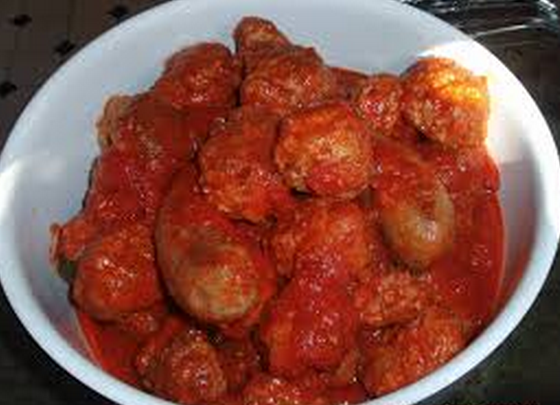
NONNA'S MEATBALLS


JULES ZUFFOLETTO says :

  Growing up an Italiana-Americana, my family always called pasta with marinara, “sauce.” Ours always had some form of carne or meat: meatballs and sausage for sure, and sometimes we would add ribs or make Braciola. No matter what, there usually wasn’t much left after dinner and we all had to retire to the living room to crash on the couch and digest for awhile. My late Grandmother, Carmella, made our Sunday Sauce dinners most of the time since we would then be visiting both her and Grandpa, Nunzio. Later, I learned how to make it and my Dad began calling me, “the meatball machine,” when I was in high school. I usually made mine a bit larger than my Grandma’s, and near softball size. The mo’ the better, right?! Plus, they did look quite impressive on the plate, if I do say so. Nowadays, I make them smaller or maybe NYY baseball size. It helps with the waistline and there’s more to go around if there are a few peeps dining. So, God Bless Sunday Sauce and my Angels (my Grandparents) up in Heaven from Abruzzi (Italia) that taught me how to make it and create a special connection with family and friends, while enjoying a deliziosoa feast. Mangiare! Mangiare!   ANDREA TAVOMINA from BROOKLYN says : Hi, My Nonna & Nonno & my Pop’s were all in Brooklyn, NY and we have always called it sauce. This gravy thing is so strange to me as that’s the brown stuff you put on a turkey at Thanksgiving.I know there is no right or wrong answer here but some get very upset over this “Gravy” thing and consider those if us who were raised using sauce to be “not true Italians”. That is what upsets me, my last name is Tavormina and it’s due to it getting a “V” added at Ellis Island (or so my Pop’s was told and then I was told) my nonno being from Taormina and Nonna from Palermo. So weather your a sauce or a gravy italian…please remember just because some of us are Sicilian and say sauce doesn’t make us any less a true Italian! Mille Grazie


ANTHONY says :

  It’s called gravy only by Italian Americans in South Philly??? Oh I don’t think so. Its Gravy…. for most of New England (North East United States) at least is true for Massachusetts and Connecticut Italian-Americans I grew up with. We actually call it gravy, Sunday Gravy, Sunday Sauce and Sauce. My Italian grandmother, grandma Salerno called it gravy and my mom calls it gravy. I have an Italian-American Recipe website and I have talked with a LOT of Italian-Americans of the past 15 years on this subject and the term “Gravy” for the pasta sauce is definitely confined to the northeast United States. You can see much discussion about this and many other things Italian-American food related ...   ROBERT from da BRONX says : Good morning James! Great story. My family is from the The Bronx and we were raised to call it gravy. We still call it gravy. I don’t believe that there is a right or wrong here. Both sets of my grandparents are immigrants from Italy and when they arrived here, they called it gravy. Another issue is that some folks only called it gravy when there was meat cooked in the tomatoes. Now that is made up here in the U.S. Someone tried to calm the powers to be and come up with something in the middle…..Ours was always gravy no matter what or how it was being cooked. There was a comment above about how she was a “real Italian American” and could not stand how some people spoke Italian and would chop off a vowell at the end. The truth be known is that there are hundreds of dialects in the Italian language and some were real proper and some were somewhat slang. It also depended on where you lived….for instance if you were living in the mountains, it was somewhat slang. The folks that lived in the hills were mostly farmers and schooling was not that important. Different story if you were living in the flatlands or in the cities.


6f289-screen2bshot2b2016-08-042bat2b8-00-442bpm

SUNDAY SAUCE

When Italian-Americans Cook


ANTOINETTE SAVIANI of CHICAGO says :


Hi, just want to say as a 2nd generation Italian from Chicago (mama’s family from Calabria /pa’s from Abruzzi) that we call it Sunday Gravy. All of my 24 aunts and uncles and 27 cousins did the same.We put it on before mass, went to Visit Nonna/grandma at my aunts house, came home, boiled the water and put the pasta /macaroni on and ate. It was loaded with meatballs, sausage, etc. On Fridays we didn’t eat meat but we had datalini with sugo (meatless gravy). I’m in my 60’s now and I have about 22 +/- people over almost every Sunday’s for “pasta Sunday’s” my older sister, her children and grandchildren and my own. We crowd around the table(s), adults and kids.A table cloth and real dishes just like Mama taught me. I will make several pots of gravy with a lot of meat and pounds of pasta. We pass the pasta,gravy and freshly grated cheese around, eat,talk, laugh and enjoy. The youngest are 1 year old twins and the oldest …well older then me. It is getting harder to do but even the little ones ask in the middle of the week, is it almost “pasta Sunday”. It doesn’t matter what you call it gravy/sauce, it’s the heritage and link to our past. Keep the traditions going and pass the recipes down. There’s always enough to give every family leftovers with extra “gravy” LOL


Robert from Harlem, New York says :

My Sicilian Grandmother called it salsa and she cooked it every Sunday for the whole family gang of aunts, uncles and cousins. We lived in Italian Harlem in New York City. My aunt from Queens called it gravy but we all ate with the same gusto.


TIM SANTUCCI says "

There are Italians in the south. lol…I know not many but we are here. Both my mom’s and dad’s family came from italy straight to the south!!! Mississippi delta to be exact. The first italians here. No influence on us from previous italians here. There are other italians here too. Most of us call it gravy. Some call it sauce. I personally have witnessed the birth of the word “gravy” being used once Italians started learning english here. My mom and other italians here called it gravy because it was thick like a “type of gravy”. It was not thin like a salsa or sauce. So the war goes on here in the south too!!!! Tooooo funny. As I grew up what I noticed was white southern americans calling anything red was a sauce. Especially because their gravy was brown. We knew nothing about that stuff. So to them the only gravy in the whole world was brown so they called our “Sugo”, “Ragu'” “Condimento” etc. a sauce. I see it being called sauce more now. As with anything involving food and language nothing is right or wrong. To me it was just a matter of how they wanted to translate or “find” an english word that would describe it. Our “Sugo” is pretty thick so I guess that’s why we call it gravy. Such an interesting subject. Please don’t think the only italians that came to america only live in the north east. Many of us in the south came in through New Orleans!!!!!!! 

All I know is that whatever you calll it, it is sure good!!!! 

Ciao tutti!!!


.


      .